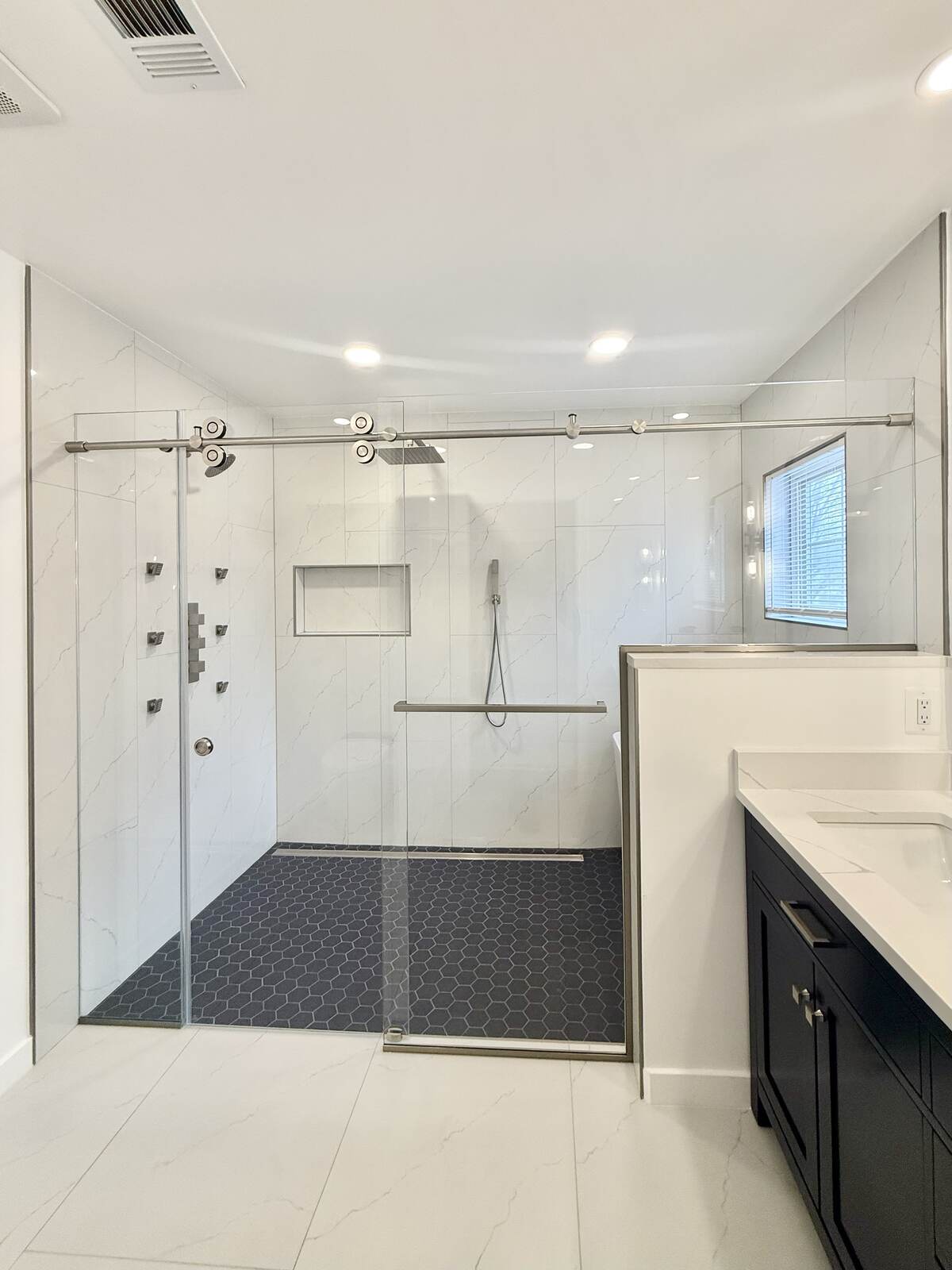
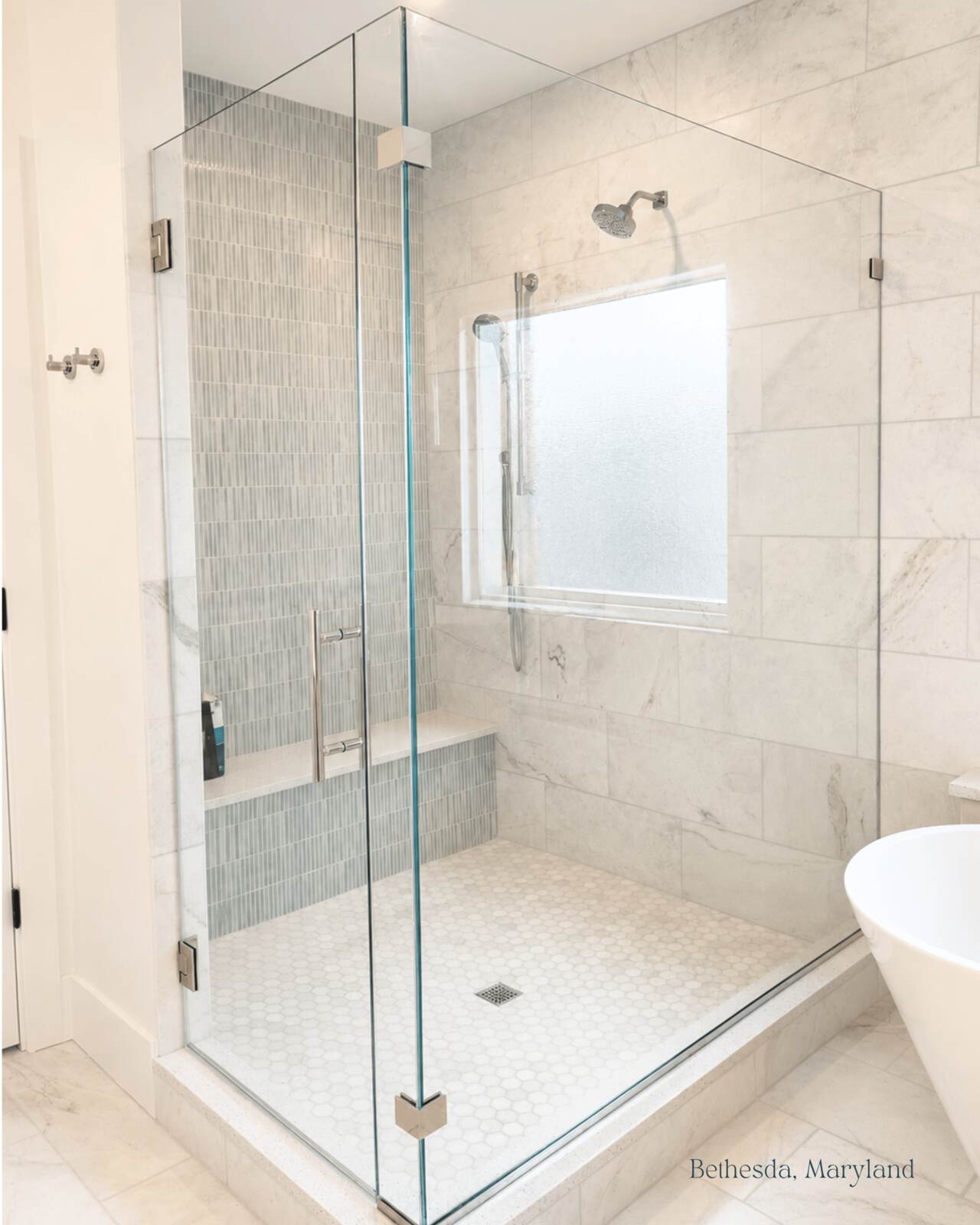
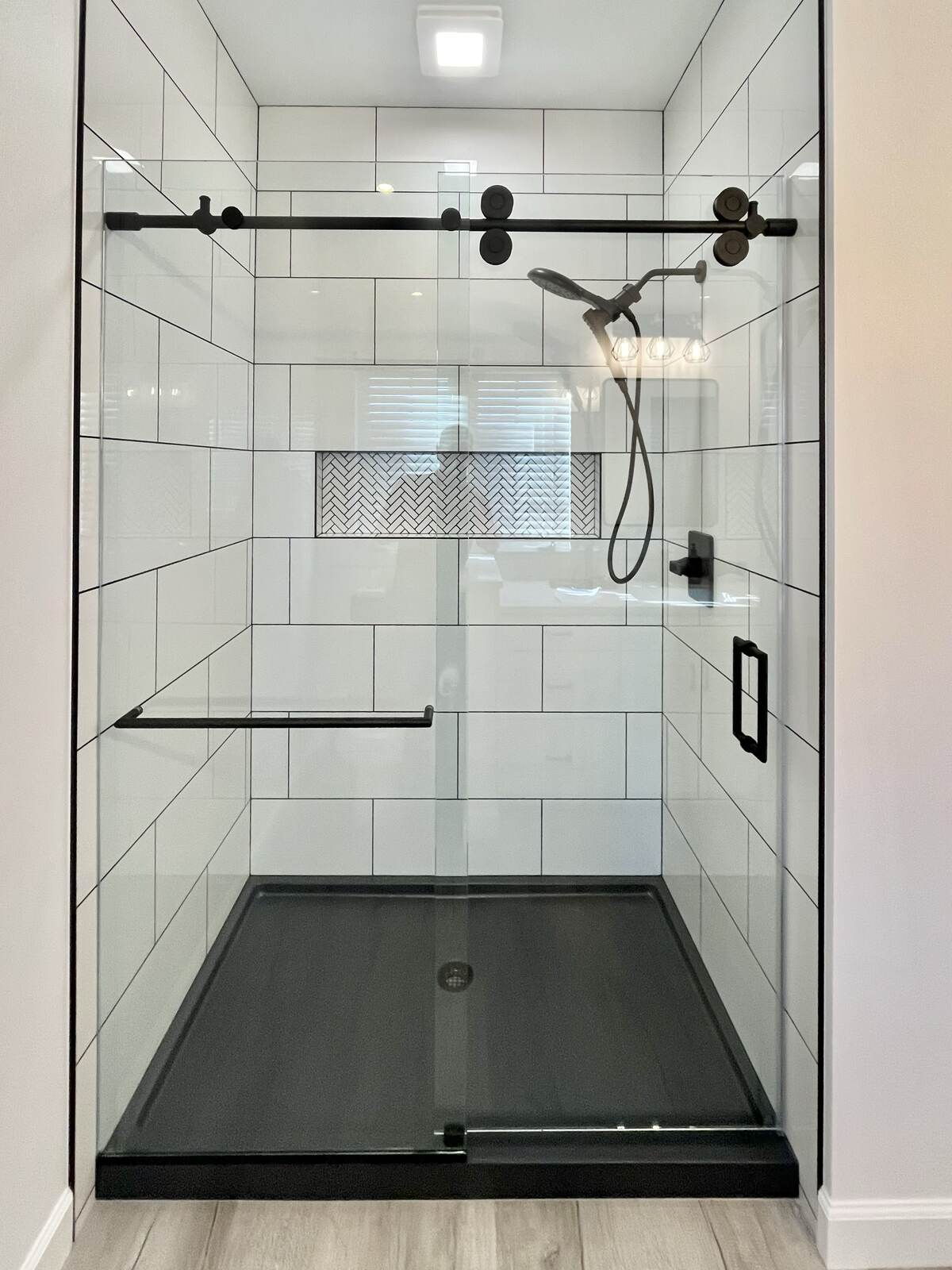
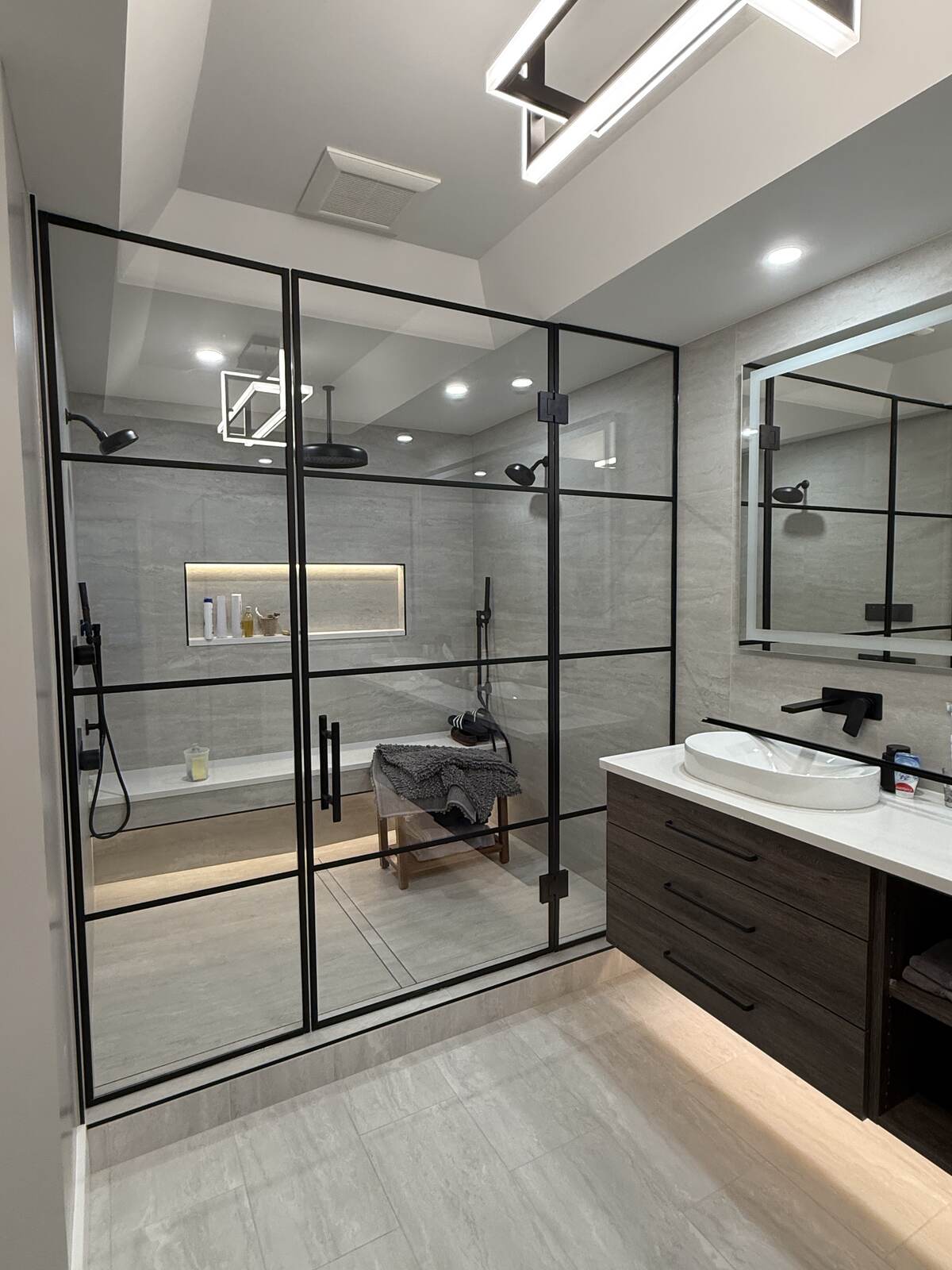


A custom mirror is made to fit the space you have. That might mean matching the width of a bathroom vanity, fitting between two sconces, covering a gym wall, or making use of a narrow section of wall in a closet.
You do not have to design the room around the sizes available at a home store. With a custom mirror, the dimensions, placement, and mounting are worked out for the room itself.
At ShowerDoorKing, we supply and install clear mirrors and a wide range of custom antique mirrors handcrafted in Italy. We work on vanities, powder rooms, gyms, closets, and other spaces where an off-the-shelf mirror does not give you the fit or finish you want.
Start with what you need the mirror to do
Before choosing a size, think about how the room will be used. A mirror above a sink needs to work with the people using it, the faucet, and the lighting. A closet mirror needs to give you a useful full-length view. A gym mirror needs the right coverage for where you exercise.
Decorative mirror has a different job. In a powder room or behind shelving, the reflection may be less important than the texture and light it brings to the space.
That distinction helps narrow the choices before you spend time comparing finishes.
Custom vanity mirrors
A vanity mirror should relate to the whole wall, including the countertop, backsplash, light fixtures, and ceiling. Simply ordering the largest mirror that will fit can leave those elements competing with one another.
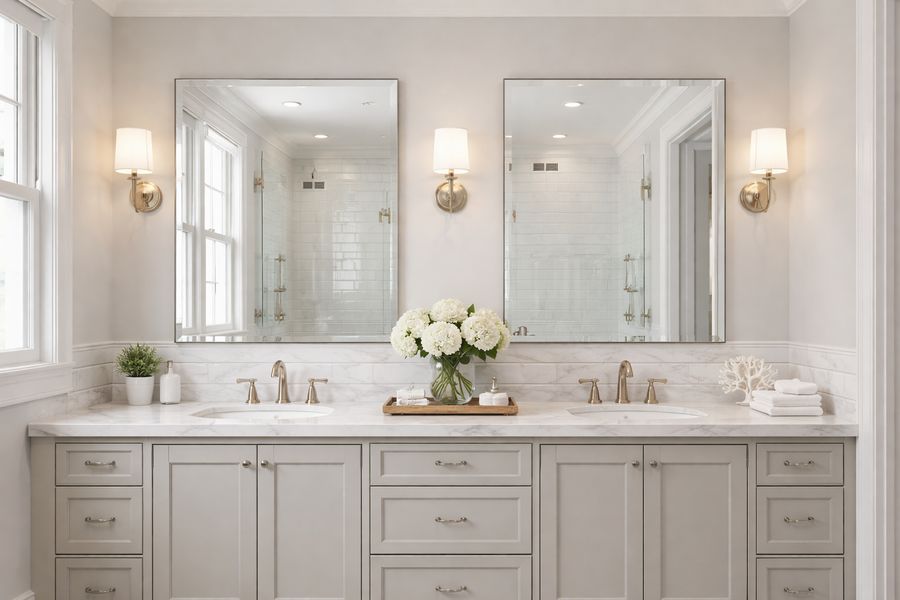
For a double vanity, you might choose one continuous mirror or two individual mirrors. A continuous mirror gives a broad reflection and an uninterrupted surface. Two mirrors can define each sink and leave room for lighting or a decorative wall finish between them.
Neither layout is automatically better. Sconce locations, available wall space, and the proportions of the vanity usually make one approach feel more natural.
If the mirror is intended to fit between walls or above a backsplash, the finished surfaces matter. We want the dimensions of the space that actually exists, including any variation from side to side.
Powder room mirrors
A powder room gives you room to make a more decorative choice. There is often less wall space, so the relationship between the mirror, faucet, and lighting becomes especially noticeable.
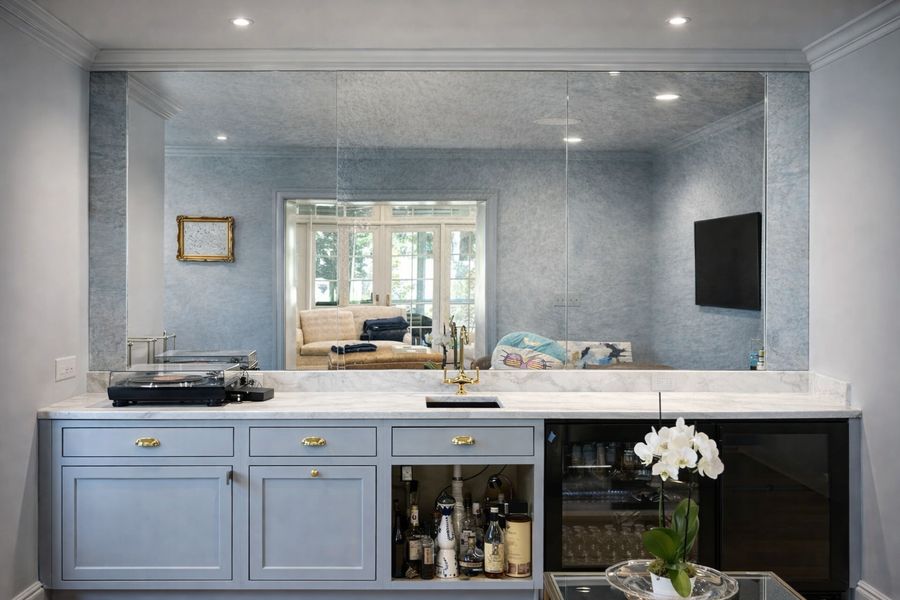
Clear mirror provides a crisp reflection and lets the surrounding materials do the work. Antique mirror introduces pattern and variation, which can suit a room with warm metals, stone, wood, or wallpaper.
Consider how much reflection you still want. A heavily antiqued pattern will look different from a lightly distressed mirror, both as a design element and when someone stands in front of it.
Gym and studio mirror walls
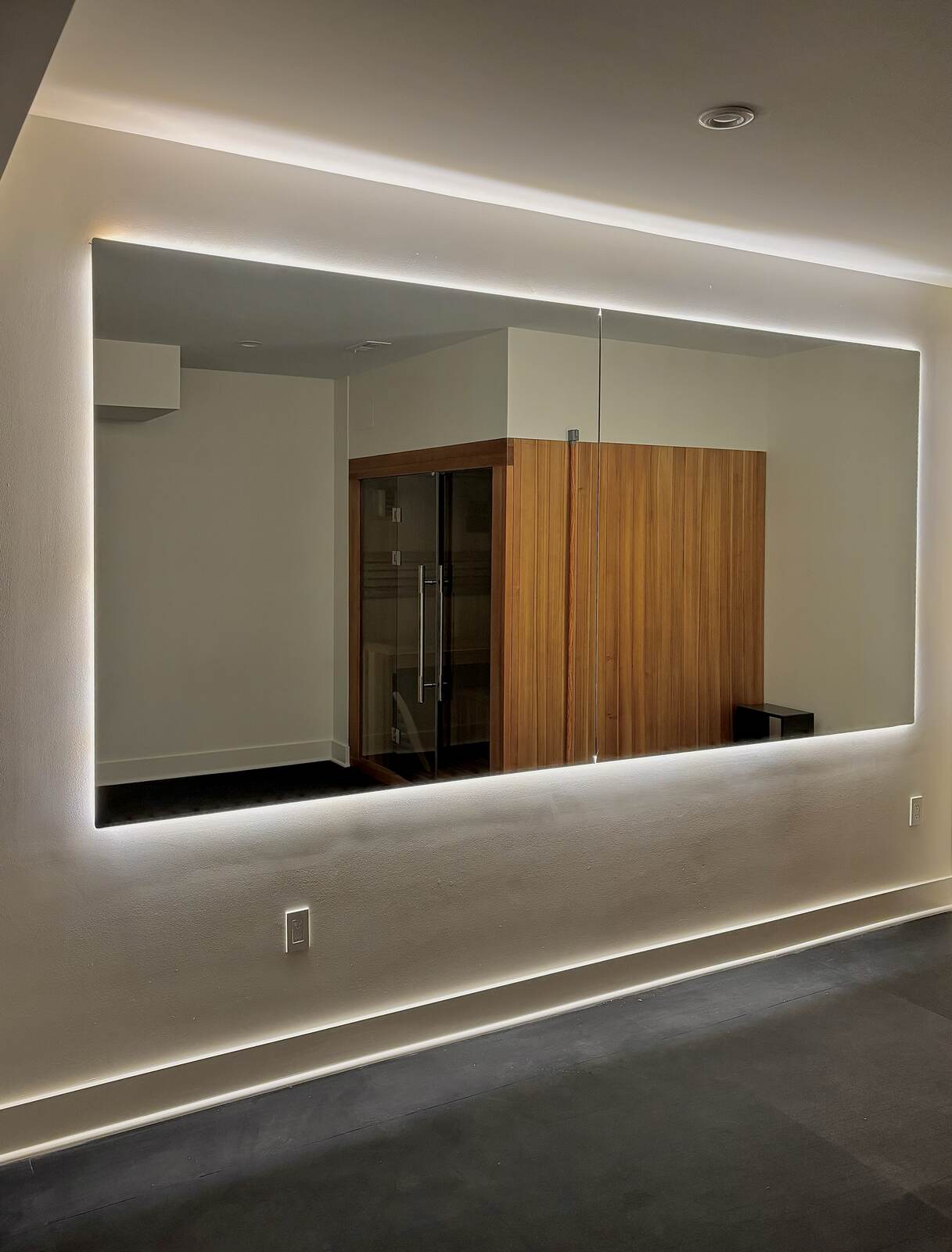
A gym mirror wall needs to be planned around equipment, outlets, trim, and how the room is used. The useful reflection should be in the right place when you are standing, stretching, or working at a piece of equipment.
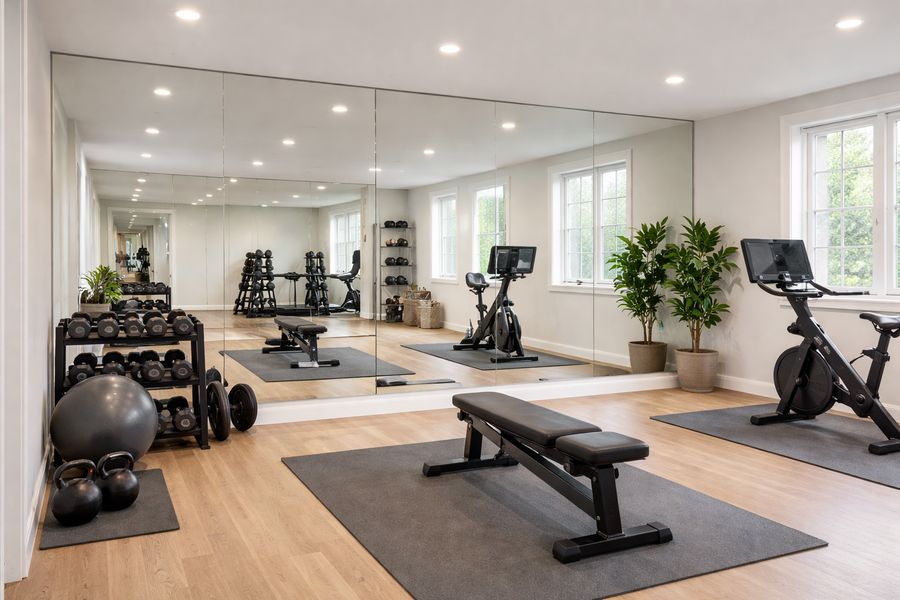
A large wall may need multiple mirror panels. Panel sizes depend on the wall, the mounting approach, and the route into the room. We also consider where the seams will fall. A seam through the center of your main workout position can be more distracting than one placed to the side.
Tell us where equipment will sit before the layout is finalized. A wall that looks empty during construction may be partly hidden once a rack or treadmill is in place.
Closet and dressing mirrors
In a closet, the right height and placement matter more than covering every available inch. You need enough room to stand back and see the reflection, and the mirror should remain useful when nearby doors and drawers are open.
Custom sizing is helpful for narrow wall sections and spaces between built-ins. Coordinate the mirror with the cabinetry so trim, handles, and shelving do not obstruct the view or interfere with mounting.
If you are considering mounting a mirror to a door rather than a wall, identify that early. The support and attachment need to suit that application.
Clear mirror or antique mirror?
Choose clear mirror when an accurate, uninterrupted reflection is the priority. It is the straightforward choice for most daily-use vanities, dressing areas, and workout spaces.
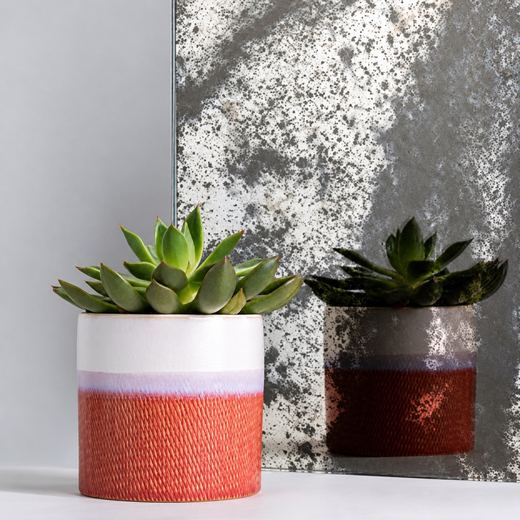
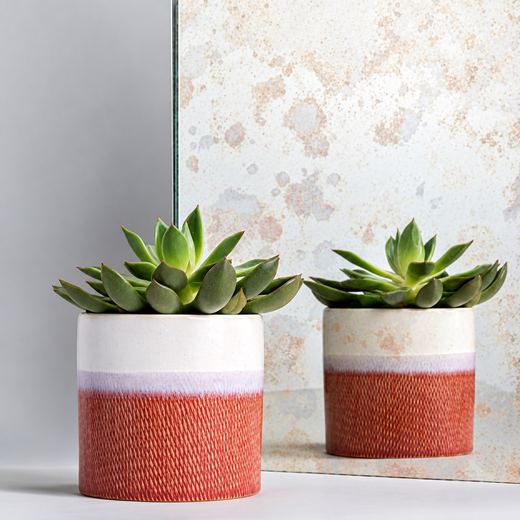
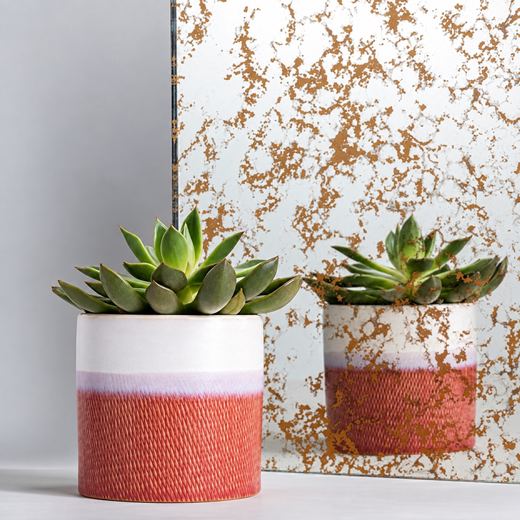
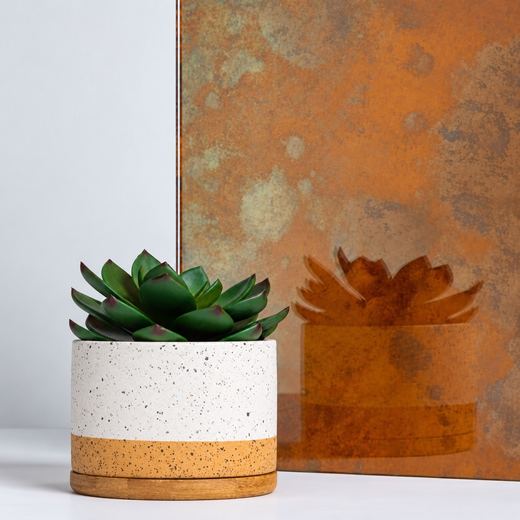
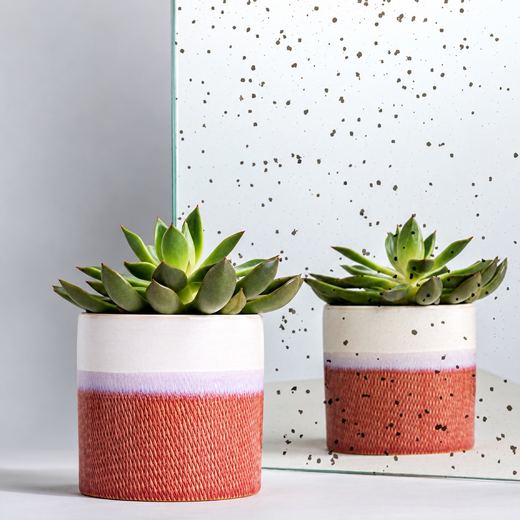
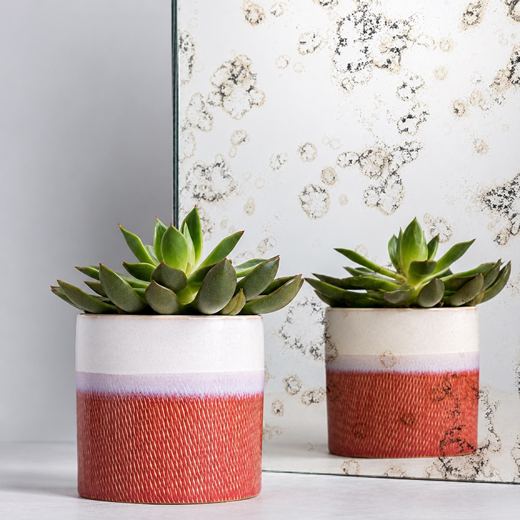
Antique mirror is a decorative material. The pattern becomes part of the room, much like the veining in stone or the grain in wood. Our custom antique mirrors are handcrafted in Italy, with a range of appearances from subtle aging to more pronounced distressing.
Look at the pattern alongside your other finishes. A small image on a screen can give you a starting point, but the amount of contrast and movement matters when the mirror covers a larger area. We can help you review the options for the effect you want.
Antique mirror does not have to be limited to a traditionally styled room. It can also add warmth and texture to simple cabinetry or a restrained powder room design.
Edges, frames, and mounting
An exposed mirror edge is part of the finished appearance. A flat polished edge gives a simple outline; a bevel introduces an angled border that catches the light. Rounded edge profiles have a different look again. The appropriate edge treatment and its availability should be confirmed for the mirror selected.
If a mirror will sit inside a frame or behind trim, some of that edge detail may be concealed. Decide how the mirror is being finished before paying for an edge treatment you will not see.
Mounting also affects the result. Adhesive, clips, channels, or other supports may be appropriate depending on the mirror and surface. We select the mounting approach for the application, rather than assuming every mirror can be attached the same way.
A wall also needs to be suitable for the installation. Custom dimensions can accommodate the shape of an opening, but they do not flatten an uneven wall. A mirror should not be forced against a bowed surface to make it fit.
Plan lighting before the mirror is made
If lights, outlets, or other fittings will interrupt the mirror, we need their final locations before fabrication. Moving a fixture afterward can mean changing the mirror as well.
If your design calls for an integrated LED or backlit mirror, send the product details early so the supply, mounting, and electrical responsibilities can be confirmed. A standard custom mirror should not be assumed to include a lighting system. Electrical work needs to be coordinated with the appropriate trade.
What does a custom mirror cost?
The price depends on the size, mirror selection, edge work, cutouts, mounting, access, and total scope of the project.
The scope makes a meaningful difference. If we are already supplying and installing your shower enclosure, adding a mirror can cost substantially less than scheduling a separate project for that mirror alone. Measurement, delivery, and installation arrangements can be coordinated with the other work.
That is why we prefer to quote the actual project instead of publishing a square-foot price that leaves out half the job. Send us all the mirrors you need, along with any shower glass, so we can consider them together.
After installation
Follow the notice left with your mirror. We typically ask customers not to touch the mirror for 7–10 days to allow the adhesive to cure. That includes resisting the urge to adjust it or clean it immediately after installation.
To get started, send ShowerDoorKing a photo of the space, approximate dimensions, and any plans showing nearby lighting or cabinetry. If you are interested in antique mirror, tell us the look you have in mind. We will help you work out the glass, fit, and mounting for the room.