
 read
read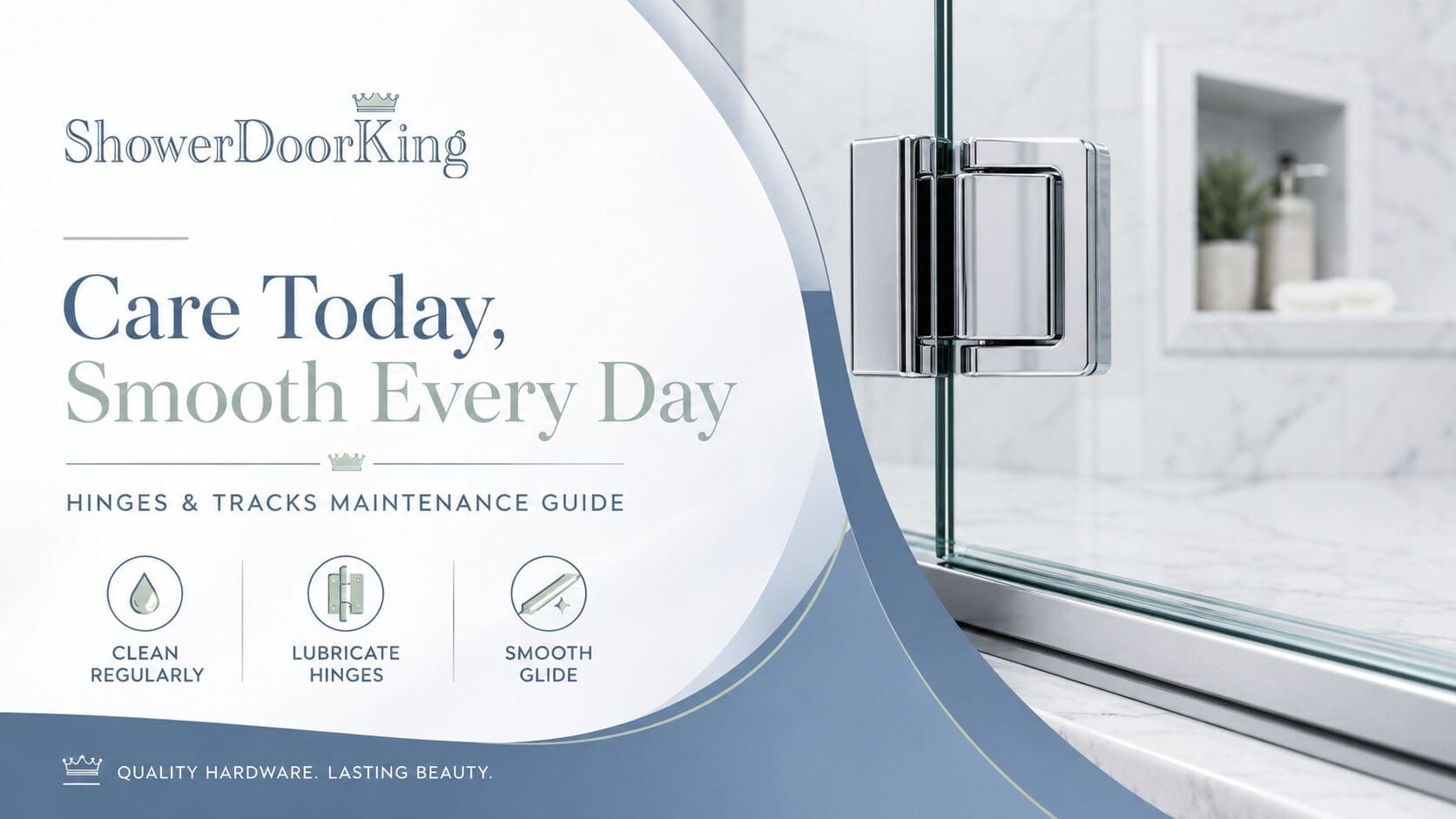
Here's a question worth asking before your shower door starts sticking, squealing, or sagging: when's the last time you actually looked at the hardware holding it up?
Most people notice their shower door the day it stops working, right, not before. A hinge that used to swing smoothly now grinds. A sliding track that used to glide now catches every time. By then, you're usually looking at a repair call, or worse, a full shower door replacement in Maryland instead of a five-minute fix.
The good news: hinges and tracks are the easiest part of a shower door to maintain and the most commonly neglected. A little attention every few weeks adds years to hardware that would otherwise wear out well before the glass ever does.
Why Hinges and Tracks Fail Before the Glass Does
Glass is durable. It doesn't corrode, and tempered glass panels are built to last decades. Hardware is a different story. Hinges and tracks are metal; they're exposed to water and soap residue daily, and they're the only moving parts on the entire door. That combination of constant moisture plus constant motion is exactly what wears metal components down.
Three things drive most hinge and track failures:
- Hard water mineral buildup. Maryland, Virginia, and D.C. all have moderately hard water in most areas. Mineral deposits collect in hinge joints and track grooves, and they don't just look bad; they physically restrict movement.
- Soap scum accumulation. Soap residue mixes with water and dries into a film that gums up sliding tracks over time.
- Skipped lubrication. Hinges are engineered to pivot smoothly, but that only holds up if they're maintained. Left dry, metal-on-metal contact accelerates wear.
None of these are dramatic. That's exactly why they go unnoticed until the door is hard to open.
Signs Your Hinges or Tracks Need Attention
Catch these early and you're looking at a maintenance task. Miss them, and you're looking at hardware replacement or a door that no longer closes flush, which can lead to leaks.
- The door feels heavier to open or close than it used to
- You hear grinding, squeaking, or scraping during use
- Visible white or gray crust around the hinge joints
- The door doesn't sit flush against the frame anymore
- A sliding door skips or catches partway through the track
- Water pooling at the base of the track instead of draining
If you're noticing more than one of these, don't wait. A door that's already misaligned puts extra stress on the hinges holding it, which speeds up wear on parts that were otherwise fine.
A Maintenance Routine That Actually Prevents Repairs
This isn't a big time commitment. Most of it takes less time than the shower itself.
Weekly:
- Wipe down hinges and track grooves with a microfiber cloth after showering. Just removing standing water cuts mineral buildup significantly.
Every 2–3 weeks:
- Mix equal parts white vinegar and water in a spray bottle. Spray directly on hinge joints and inside the track, let it sit 5–10 minutes to break down mineral deposits, then wipe clean with a soft brush; an old toothbrush works well for tight grooves.
- Avoid abrasive scrubbers or anything acidic beyond diluted vinegar. Harsh chemicals and rough pads can pit metal hardware and dull frameless glass edges.
Monthly:
- Apply a silicone-based lubricant (not WD-40 or petroleum-based oil, which attracts more grime) to hinge pivot points. A few drops per hinge is enough.
- Check that all visible screws on hinges and mounting brackets are snug. Loose hardware is one of the most common causes of a door that no longer hangs straight.
Twice a year:
- Inspect the full track for warping or corrosion, especially near the bottom where water collects most.
- Check the door's alignment against the frame. If it's shifted even slightly, get it adjusted before it wears the hinges unevenly.
Best for: the bathroom you're not planning to touch again for 15 years — usually the primary or a full remodel where the shower is the centerpiece of the room.
When Maintenance Isn’t Enough
Sometimes the hardware is past the point where cleaning and lubrication fix it; the metal is corroded through, the track is warped, or the hinge itself is stripped. That's not a DIY afternoon anymore; it's a job for someone who works with custom shower doors daily and knows which hardware is actually compatible with your specific door.
This matters more than it sounds like it should. Hinges and tracks aren't universal parts. A mismatched replacement hinge can throw off the whole door's balance, and with frameless glass in particular, that's not a small issue. Frameless shower doors rely on precise hardware alignment to support the weight of the glass itself, since there's no metal frame doing that work for it.
If you're in Ijamsville or anywhere across the Maryland, Virginia, or D.C. area and you're past the point where a vinegar soak is going to help, that's where custom-fit shower doors in Ijamsville, MD come in hardware that's actually measured and matched to your door, not a generic part from a hardware store shelf.
Frequently Asked Questions
How often should shower door hinges be lubricated?
Once a month is a reasonable baseline for most households. If you have a larger household using the shower daily, every 2–3 weeks keeps things running smoother.
Can I use WD-40 on shower door hinges?
It's not recommended. WD-40 is petroleum-based and tends to attract more dust and grime over time, which defeats the purpose. A silicone-based lubricant is the better long-term choice for bathroom hardware exposed to constant moisture.
Why is my sliding shower door hard to open?
Almost always mineral buildup or soap scum in the track. Clean the track thoroughly with a vinegar solution first; if it's still sticking after that, the track itself may be warped or the rollers may need replacing.
Is it cheaper to repair hinges or replace the whole door?
Repairing hardware is almost always the cheaper option, and it's worth doing if the glass itself is in good shape. Full replacement only makes sense when the glass is damaged, the door is significantly out of alignment, or the frame/track has corroded beyond repair.
The Bottom Line
Hinges and tracks are the part of your shower door most likely to fail first, and they're also the easiest to prevent from failing. A few minutes of cleaning every couple of weeks and a monthly drop of lubricant is genuinely enough to keep most doors running smoothly for years.
But if your hardware is already past that point grinding, misaligned, or visibly corroded, don't force it. A door under strain puts pressure on hinges that aren't built to compensate, and that's how a hardware problem turns into a full shower door replacement in Maryland sooner than it needed to.
ShowerDoorKing has been installing and servicing custom shower doors across Maryland, Virginia, and Washington, D.C., for over 30 years. If your hinges or tracks need more than a cleaning, get a free quote or call 301-874-0156.