
 read
read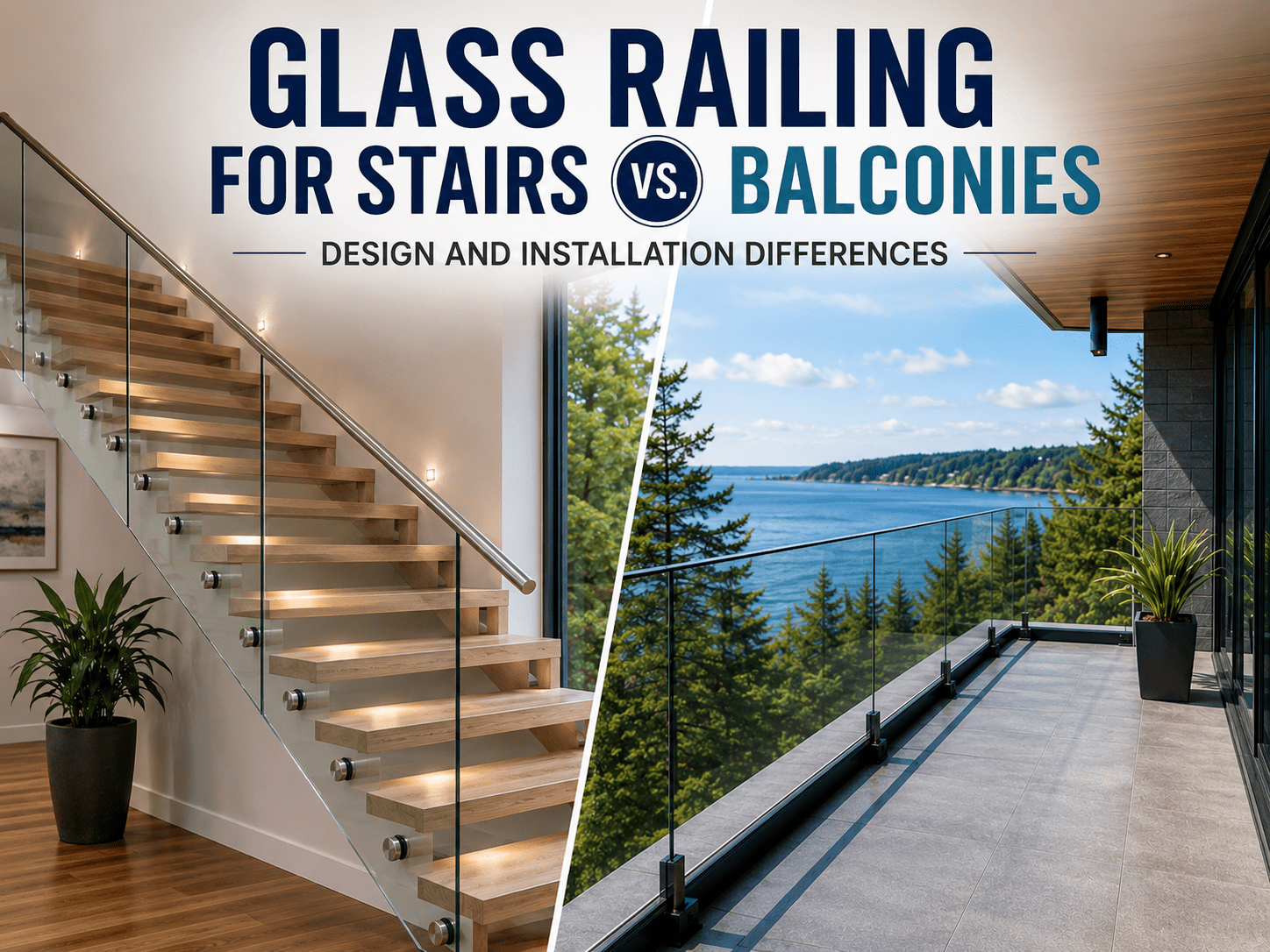
Glass railing for stairs and balconies is designed to fulfill different safety requirements and control loads based on different installation conditions. Railings for stairs to cope with changing angles and continuous movement and balcony railings to counter exterior exposure, wind forces, and edge protection requirements.
Even though both applications use glass panels to provide a clean, open look, the details of the design, mounting, and installation can vary widely.
If you are a homeowner who is considering glass railing Maryland projects, it helps to know the differences so that the right solution is selected from the start.
What Are the Core Differences Between Stair and Balcony Glass Railings?
While both serve as safety barriers, they are made for different environments and usage patterns.
The slope of stair railings is dictated by the slope of the staircase itself. Though balcony railings provide protection for outdoor areas situated at a height, they are installed along the level edge.
Some of the primary differences include:
- Structural support requirements
- Glass panel sizing and layout
- Mounting hardware selection
- Exposure to weather conditions
- Installation complexity
- Local code compliance considerations
The following comparison provides a quick overview.
| Feature | Stairs | Balconies/Decks |
| Glass Thickness | Often varies based on span and design | Frequently selected for higher exterior loads |
| Mounting Hardware | Posts, standoffs, or stair-specific channels | Surface-mounted, fascia-mounted, or base shoe systems |
| Safety Requirements | Focus on fall protection and stair navigation | Focus on edge protection and exterior safety |
| Typical Install Time | Often requires more layout customization | Usually more straightforward on level surfaces |
How Is Custom Glass Railing Designed for Staircases?
Staircase design and engineering are challenging because the design of the railing system must follow the slope but be equally safe.
Structural and Safety Considerations
Stair railings must typically comply with local building codes that address guard protection and user support requirements. The alignment and anchoring of stair railings are essential because people make direct contact with the railings when going up or down the stairs.
The design process usually includes:
- Measuring stair pitch and rise
- Determining panel placement
- Planning handrail integration if required
- Evaluating attachment points within the stair structure
Each staircase has its own dimensions, making custom fabrication an important part of the process.
Common Mounting Methods for Stairs
There are several different installation methods for stairs.
Post-Supported Systems
Glass panels are affixed between metal posts positioned along the staircase. Using this method can make installation easier while creating a strong structure.
Standoff Systems
Special hardware is attached to the side of the staircase structure to mount glass panels. The method creates a more open look since fewer visible parts are present
It is dependent on the design of the stair, the structural conditions, and want.
What Makes Balcony and Deck Glass Railings Different?
Balcony and deck railings are faced with problems that stair railings often do not experience.
Weather Exposure Requirements
Outdoor installation must resist different climatic conditions in every season. The selection of materials and design of systems are influenced by rain, temperatures, UV rays, and wetness.
Because of these factors, installers carefully evaluate:
- Drainage paths
- Water management
- Corrosion-resistant hardware
- Long-term maintenance needs
A good balcony system should be able to maintain its performance level and aesthetics throughout the seasons.
Wind Load and Structural Performance
Depending on where it’s located and the height, balconies and raised decks can be very windy. Community construction codes commonly take care of these situations by way of design and engineering requirements.
Safety glass is thus frequently specified, with supports chosen to suit project requirements on an anticipated structural basis.
How Does the Installation Process Differ?
The installation process might significantly differ despite custom fabrication and precise measurement for both uses.
Stair Installation Challenges
Stair projects usually need a lot more detailed field measurements since each angle has to align with the stairs.
Installers often need to account for the following:
- Variable stair geometry
- Transition points
- Handrail integration
- Tight installation tolerances
Inaccuracies in measurement, no matter how minor, can impact panel fit and appearance.
Balcony Installation Workflow
Decking and balcony jobs are often built on flat surfaces, which simplify layout and panel placement.
However, installers must still address the following:
- Surface preparation
- Waterproofing concerns
- Structural attachment points
- Exterior exposure factors
As balcony project areas are usually evenly leveled, the installation can progress quickly once fabrication is complete.
When Does a Frameless Design Make the Most Sense?
Frameless glass railings can work exceptionally well in both applications, but the design goals are often different.
For Staircases
Homeowners frequently choose frameless systems to:
- Open up interior sightlines
- Increase natural light flow
- Create a modern architectural appearance
- Highlight custom stair features
In homes with open floor plans, eliminating visual barriers can make spaces feel larger and more connected.
For Balconies and Decks
Frameless balcony railings are advantageous for not blocking views.
Homeowners can enjoy a clear view of the backyard, water feature, wooded property, or cityscape with the use of glass that is free from heavy railing components.
The decision often comes down to balancing aesthetics, structural requirements, and budget considerations.
Which Option Requires More Customization?
While both must be fabricated precisely, this necessitates more customization than stair railings.
Because stairs are built with different elevations, angles, and transitions, many glass panels will require bespoke sizes and specialized hardware applications.
Balcony installations will remain highly customizable, especially with these corners, curves, and more. Nonetheless, the level runs generally cause a more predictable fabrication and installation process.
For this reason, many stair projects are planned and coordinated before the production stage.
Choosing the Right Glass Railing for Your Project
If you are redesigning a staircase or an outdoor liveable area, knowing the differences between stair and balcony installations can ensure the system is designed for safe and high performance.
ShowerDoorKing designs and installs custom glass railing systems throughout Maryland, Virginia, and Washington, DC. If you’re considering a staircase, balcony, or deck project, let our team help you select the best solution for your home. We consider layout, structure, and design.
FAQ
Is glass railing safe for stairs?
Yes. Glass stair railings are capable of effectively ensuring fall protection and fulfilling the required safety specifications when properly designed and installed. Use the right materials, hardware, and installation for the solution.
Does balcony glass railing require different glass thicknesses?
Most balcony systems have different designs, as they require consideration of external conditions as well as structural load requirements. The engineering and code requirements of the project decide the final glass specification.
Can the same glass railing system be used for both stairs and balconies?
Certain design styles can be adapted for both applications, but the hardware, mounting procedures, and structural details differ often. It is best to evaluate each shop individually.
Are frameless glass railings harder to maintain?
Unlikely. Typically a regular clean using the right glass-safe product is adequate. Railings on the outside of the home might need more regular cleaning because of their exposure to the weather.